

Pakistan is considerably comes under developed nations, where climate crises, poverty, food insecurity, unemployment and illiteracy are common issues. The government has been trying its best to overcome these basic issues for a long time but has not succeeded yet. Every fiscal budget of the state strongly justifies that problems would be solved very soon, but tall claims never come true.
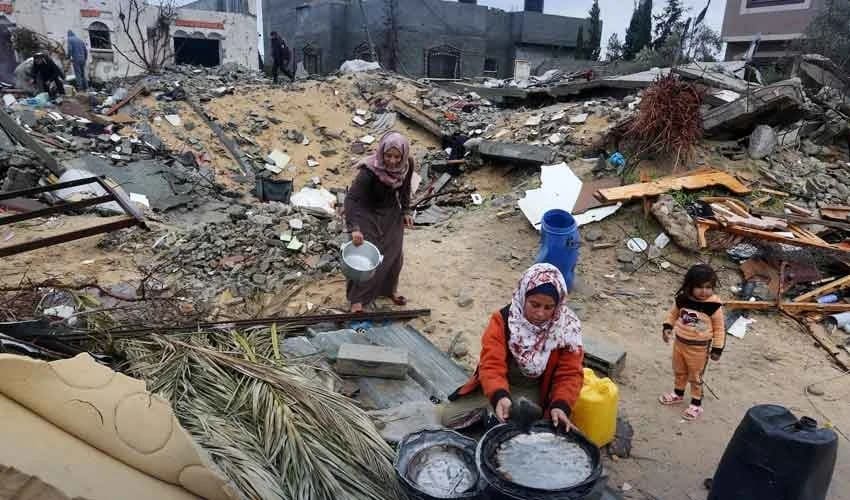
Across Pakistan, massive community associated with welfare organisations working quietly in communities where public services offers by the government remain insufficient. Some organisations supply food to families struggling to survive. Others arrange medical assistance for people who cannot afford medication. Many are trying to educate children who might otherwise remain outside the formal education system. A few work on women’s empowerment, disability, disaster response, poverty alleviation, and community development.
In this situation, the contribution of the welfare organizations (NGO) to the development of the nation must be admired by the state. These organizations serve people without asking the government for any kind of support, either financial or logistical. In response to their contribution for the sake of a better future of the nation, they expect nothing but encouragement, which may extend their courage to work beyond their capacity. This is where welfare organisations and NGO’s enter a space that the state cannot afford to ignore. Their work may not always make headlines, but its social value cannot be measured merely in financial terms.
These organisations should not be viewed simply as recipients of charity but, more or less, as partners in addressing problems of the state that are too widespread for the government to tackle alone. When a welfare organisation reaches a poor family, provides food to a hungry child, arranges medical treatment or brings education closer to a least served community, it is actually contributing to the broader development of the country. What such organisations need from the state is not prejudiced treatment but recognition, transparency, clear rules and an enabling environment. At the same time, no responsible state can afford to ignore the question of accountability, particularly when foreign funding is involved in their respective welfare projects.
As a sovereign state, it has legitimate reasons to regulate foreign contributions received by the local non-profit organisations. The entire process of foreign funding must be transparent, properly documented, and utilised for the purposes for which it was provided. Donors also have a legitimate expectation that their financial contributions will produce the intended social outcomes. The current framework, “the Policy for Local NGOs/NPOs Receiving A strict policy for Foreign Contributions, requires registration, relevant experience, tax status, work plans and other documentation. Foreign-funded projects are subject to an MoU process and stakeholder/security review. It is also clearly mentioned in the policy documents of EAD that the maximum processing period of 60 days applies once an applicant formally registers its case.
The state policy has its own worth but the point which is little more important to be explained that once foreign funding comes for a specific welfare organization expects the results for which they have share their investment. They may be more conscious about their investment for welfare as they are asked to complete the entire paperwork and submit reports from time to time. Foreign contributions need transparency at every stage of work while the government responsible to regulate consumption of the funds from its first stage to end of the project deadline as per law.
Pakistan already faces enough challenges existing since it come on existence. It does not need another divide between the government and the welfare sector. The state has resources, authority, and institutional capacity, while these welfare organisations often have community reach, local knowledge, and the ability to respond quickly. Donors, either local or international, bring financial resources and, in many cases, technical expertise. If these three forces work within a transparent and accountable framework, the beneficiaries should ultimately be the people of Pakistan.
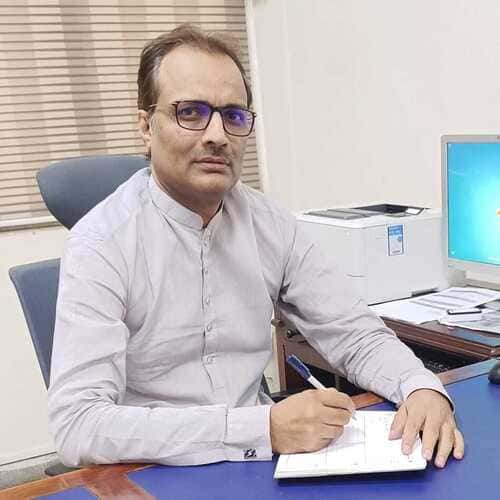
Mr. Awais Akram is a well-known expert in the welfare and NGO sector. He can be reached at [email protected]
Note: The views expressed are solely those of the writer and do not represent any official policy or position.

Well written and actually the voice of those who are quietly serving humanity expecting nothing except respect and regard. Keep it up Dr sb. Good wishes for you
A truly thoughtful and insightful masterpiece, Awais. 👏 You have beautifully highlighted the vital role of welfare organizations in addressing Pakistan’s social challenges, while also emphasizing the importance of transparency and accountability. A strong reminder that meaningful change requires collaboration between the state, civil society, and communities. Well articulated!
An insightful and well researched piece. Mr. Avais has done an excellent job of highlighting the often overlooked contribution of welfare organisations and NGOs in addressing Pakistan’s social challenges. The discussion on balancing government regulation, accountability, transparency and the need to create an enabling environment for the welfare sector is particularly thoughtful.
This remarkable writeup showcases the author’s strong command of the subject and awareness of current realities.
Through this well-crafted piece, the author successfully brings attention to the realities of the current situation.
This is remarkably well-structured, clear, and thoroughly researched.
Your analysis is exceptionally well-articulated and logically organized.
The imagery you created painted a powerful picture from start to finish.