
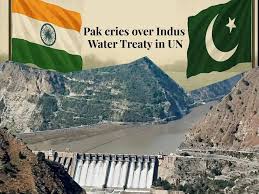
Planning Minister Ahsan Iqbal said Pakistan is navigating heightened tensions over transboundary water resources after India suspended the decades-old Indus Waters Treaty (IWT) last year and blamed Pakistan for a militant attack in Indian-administered Kashmir that killed 26 people, an allegation Pakistan denied.
It was signed in 1960, the treaty was brokered by the World Bank and governs the distribution of waters from the Indus river system, allocating the western rivers Indus, Jhelum, and Chenab primarily to Pakistan, which relies on them for most of its agriculture.
The agreement was long viewed as one of the most durable arrangements between the nuclear-armed neighbors, surviving decades of hostility, until the two countries went to a brief but intense military conflict in May 2025. “The Ministry of Planning, Development & Special Initiatives has arranged a meeting of the Task Force on Water Security, focused on expanding storage capacity, strengthening water management, and promoting urban water solutions,” the statement said.
Officials say addressing the storage gap will require a mix of large, medium, and small dams, alongside measures such as groundwater recharge, floodwater retention, and rainwater harvesting in urban areas. “Strengthening water security today is essential for food security, economic stability, and a prosperous Pakistan tomorrow,” the ministry said.
